A young instrument with ancient roots
The handpan is one of the world's youngest acoustic instruments. It was born in the year 2000, in a small workshop in Bern, Switzerland, when Felix Rohner and Sabina Schärer of PANArt set two hammered steel shells against one another and listened to what happened in the space between them. They called the result the Hang — Bernese German for "hand" — and unknowingly opened a door that has not closed since.
Though the instrument itself is new, almost nothing about it is. The handpan is a quiet conversation between traditions that, until then, had never been in the same room. Its convex form echoes the steelpan of Trinidad and Tobago. Its overtones recall the Indian ghatam and the West African udu. Its meditative presence carries something of the gong, the gamelan, and the singing bowl. The handpan did not invent a new sound so much as it offered an unfamiliar shape for sounds the human ear has loved for a very long time.


How is it made?
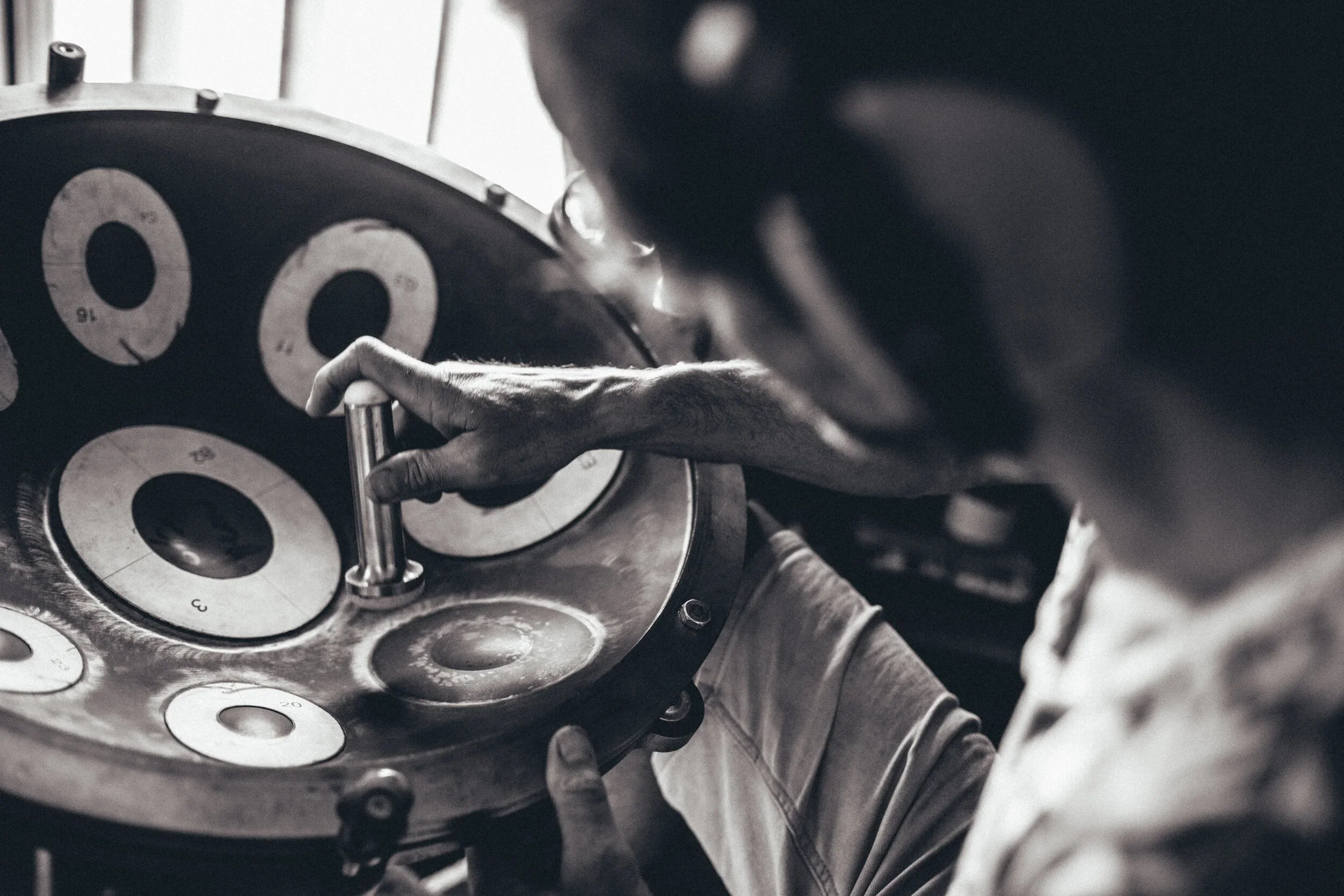
Each handpan begins as two thin sheets of steel. The maker hammers them slowly into domes, joins them at the rim, and then — note by note — coaxes a scale into the upper shell. Tuning a single instrument can take weeks. The metal must be persuaded, never forced; a tone field that is rushed will not hold its pitch, and a shell that is over-worked will lose its voice entirely. This is why no two handpans are exactly alike, and why the people who make them are often spoken of less as manufacturers and more as craftsmen.
Why it resonates
A handpan asks very little of the player. There are no strings to press, no reeds to manage, no sheet music waiting to be read. You sit with it across your lap, rest your hands on its surface, and listen. The instrument tends to meet the player where they are — calm if they are calm, playful if they are playful, searching if they are searching. For many people, this is the first instrument they have ever felt comfortable improvising on.
It is also, by nature, a social instrument. Handpans are most often discovered in parks, in circles, between strangers. The sound carries gently, and people gather without being asked.
A sound the body recognises
Long before anyone called it therapy, people gathered around resonant metal — bells in temples, gongs in ceremony, singing bowls in quiet rooms — because the sound seemed to do something. Breathing slowed. Shoulders dropped. The mind, without being told, became a little less busy.
The handpan belongs to this lineage. Its tones sit in a frequency range the human ear finds especially soothing — roughly 200 to 1,000 hertz — and each note carries a halo of overtones that continue to ring long after the hand has lifted. These overtones do not compete with one another. They settle. The result is a sound that feels less like music being played at you and more like a room slowly filling with warm light.
Players often describe entering a meditative state without trying. That is not a marketing phrase; it is a recurring observation, reported across cultures and across years. The handpan invites attention rather than demanding it, which is perhaps why so many people who never thought of themselves as musical find themselves playing one for an hour without noticing the time pass.


What the research is beginning to show
Music as medicine is no longer a fringe idea. Decades of clinical research have shown that listening to calming music can lower cortisol, reduce blood pressure and heart rate, ease pre-surgical anxiety, and shift the nervous system from a state of alertness toward a state of rest. Sound-based practices using gongs and Tibetan singing bowls — instruments whose acoustic profiles closely resemble the handpan's — have been studied in peer-reviewed journals and consistently associated with reductions in tension, anger, and fatigue, and improvements in reported mood and spiritual wellbeing.
Research specific to the handpan is younger, but it is growing. A study at the University of Regensburg in Germany examined the effect of handpan sound on people living with chronic tinnitus and found measurable reductions in distress after listening sessions. Smaller studies and clinical observations from sound therapists working with the instrument point to similar patterns: slowed breathing, lowered self-reported stress, and easier transitions into meditative states. The mechanism is the same one that underlies most music-based interventions — the parasympathetic nervous system, the body's "rest and digest" mode, responds to gentle, predictable, harmonically rich sound.